
Four-Bed or Three-Bed? North East Family Leases Explained


A North East social housing buy-to-let is an ordinary two- or three-bedroom terrace, bought for £75,000–£105,000 and leased for five years to Mears on its family contract. It goes on in one of two shapes: converted to four bedrooms at £1,100–£1,200 a month, or left as a three-bedroom home at about £775. Which one is right depends on the house, and on you.
I'm George Samoila. This year Manchester Sourcing has been buying in South Tyneside, Gateshead, Sunderland, Newcastle, Middlesbrough and County Durham. Here are both shapes, with the downsides said out loud.
How does a North East social housing buy-to-let work?
You buy the house. The provider leases it for five years, places a family in it, and pays the rent monthly whether it is occupied or not. You never have a tenancy with the family.
The demand behind it is families. On 31 March 2026 there were 135,580 households in temporary accommodation in England, a record, and 86,460 of them had children. Councils need ordinary family homes, and the North East has them at low prices.
Mears runs three separate contracts in the region: families, prison leavers and asylum accommodation. We take the family contract. Families tend to look after a home, and it is the most politically durable of the three, which matters when you are relying on a five-year lease. Two other providers work alongside Mears in Newcastle, Middlesbrough, Sunderland and Durham, so if one won't take a house, we go to the next.
What does the four-bed conversion involve?
The four-bed is the stronger rent and the bigger job. A two- or three-bed terrace is reconfigured to four bedrooms, furnished, and leased at £1,100–£1,200 a month. The refurbishment is usually £11,500–£25,000 including furniture and project management, depending on the starting condition and how much of the layout moves.
Why the work? The provider wants a reception room of at least 25 square metres, plus four proper bedrooms. In practice that often means taking out the wall between the stairs and the lounge and reworking the upstairs. Every bedroom still has to meet the 6.5 square metre minimum we covered in our post on minimum bedroom sizes for social housing.
A recent example from October 2026:
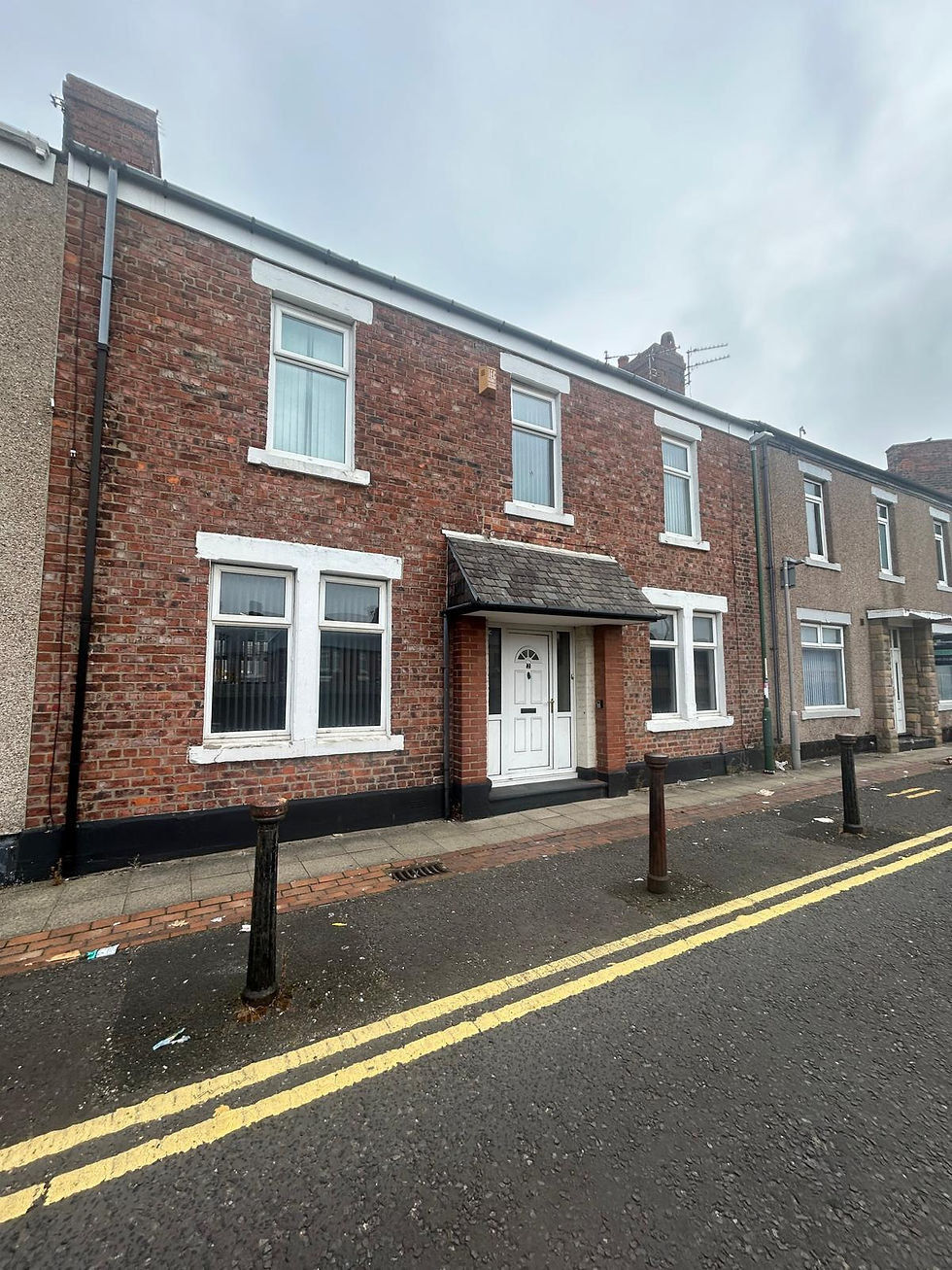
Two-bed in South Shields, converted to four: £95,000 purchase, £18,000 + VAT refurbishment, £1,200 a month. That is roughly 12% gross on the purchase and works, before finance costs, purchase costs and tax.
The upside beyond the rent: adding a bedroom usually lifts the valuation. An £85,000 two-bed reconfigured to three has valued at £110,000 or more. That is not guaranteed, and we quote every deal on the rent, never on the hoped-for valuation.
What about leaving it as a three-bed?
The three-bed is the quieter option. If the house is already a sensible family home, it goes to the provider much as it stands, on a cosmetic refurbishment of roughly £4,000 + VAT, and leases at around £775 a month. Lower rent, far less cash in, and nothing structural to go wrong.
Three-bed in Jarrow, no conversion: £104,000 purchase, £4,000 + VAT cosmetic work, £775 a month. Roughly 8.5% gross on the purchase and works.
This one started as a four-bed plan. We switched it when the numbers moved, because it was the better answer for that house. Since late September the three-bed has been a standing product, not a fallback.
Which shape suits which investor?
The provider decides which shape a given house suits, not us and not you. Within that, here is how I'd think about it:
Pick the four-bed if you want the strongest rent on the money, you are comfortable with a conversion, and you have the cash for a bigger refurbishment and furniture.
Pick the three-bed if you want less cash tied up, a shorter job and less to go wrong, and you can live with a thinner rent.
What are the catches?
Here is the list we give every investor before they buy:
Mortgages on cheap stock. Several lenders set a minimum property value, and the cheapest North East houses fall below it. Buy cash, or buy one that values up after the conversion and refinance. Your broker will tell you where the floor sits.
Rates have risen. The average five-year fixed rate hit 6% on 5 October, the first time in about three years. Overseas investors on a specialist social housing lender should expect around 7.49%. Run your numbers at today's rate, not last spring's.
Furniture is on you. National providers want the house furnished. It is built into the four-bed budget.
The repairs you keep. The provider handles internal maintenance and tenant damage. You keep the exterior, the electrics, the boiler and the pipework, as we set out in who pays for repairs on a social housing lease.
The hand-back. A family home let for five years will need redecorating and probably new flooring at the end. Budget for it.
The break clause. On a five-year lease the provider can usually end it around the halfway point, on notice. Read it before you buy.
Lease rents move. We confirm the rent with the provider on each house before the deal goes out.
Overseas buyers: currency movements, a larger deposit, the 2% non-resident stamp duty surcharge and UK tax on the rent. Speak to your accountant.
What this means for you
If you have £40,000–£60,000 and want hands-off income from a house rather than a project, the three-bed is the simpler start. If you have more cash and want the rent working harder, the four-bed is where the North East numbers are strongest, as long as you go in knowing it is a conversion with furniture to buy.
Either way it is a normal house, so if the lease ends you can renew, switch provider, let it privately or sell. Check the purchase costs on our stamp duty calculator (a £100,000 purchase is £5,000 if you are UK resident and £7,000 if you are not), and see what is on our current deals page.
FAQ
Are North East family houses HMOs? No. They are three- or four-bedroom houses for one family, on a single lease to the provider. They are not let by the room and need no HMO licence. A licence is only needed where the house sits inside a council's selective licensing area, so we check the council's map for each one.
Who approves the house before I commit? The provider. It confirms the house and the rent before a deal goes to an investor, and carries out a fire risk assessment. It won't sign off until any recommendations are done, and that work is part of what we manage. Nothing is sent out until the house has been seen in person.
How long until the rent starts? On a cash purchase, roughly a month to get the keys and about another month for the works and handover to the provider. A mortgage purchase takes longer to complete, but the works timeline after completion is the same. Budget for the months without rent.
Can I buy from overseas without visiting? Yes. Our North East partner views every house, sends video, negotiates and manages the works locally. You will deal with currency, a larger deposit, the non-resident stamp duty surcharge and UK tax on the rent, so line up a broker and an accountant before you start.
Is the rent guaranteed? The lease rent is guaranteed by the provider for the term, paid monthly whether the house is occupied or not. Capital growth is not guaranteed. The provider can usually use a break clause around the halfway point, which is why area and exit matter as much as the rent.
Talk it through
Want to know which shape fits your budget? Book a 30-minute Discovery Call and we'll go through the numbers and what can go wrong.


Comments